Modular buildings are usually the better choice for temporary, remote, or relocatable mining camps. They shorten project timelines, reduce reliance on local labor, simplify logistics, and can be expanded or relocated as the project evolves. Traditional construction may still be appropriate for permanent mine towns or long-life facilities where local materials, skilled labor, and stable infrastructure are readily available.
The right mining camp system depends on project duration, workforce size, site access, climate, budget, and whether the buildings must be relocated after a mine phase ends.
This guide compares modular buildings and traditional construction for mining camps, focusing on construction schedules, remote-site logistics, project flexibility, building performance, and total cost considerations.
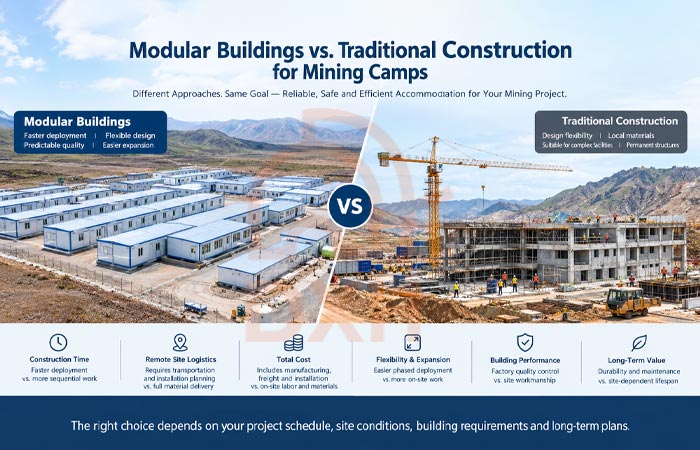
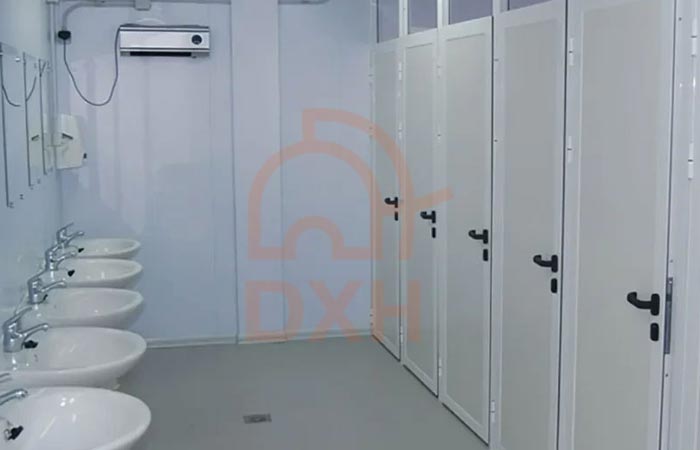
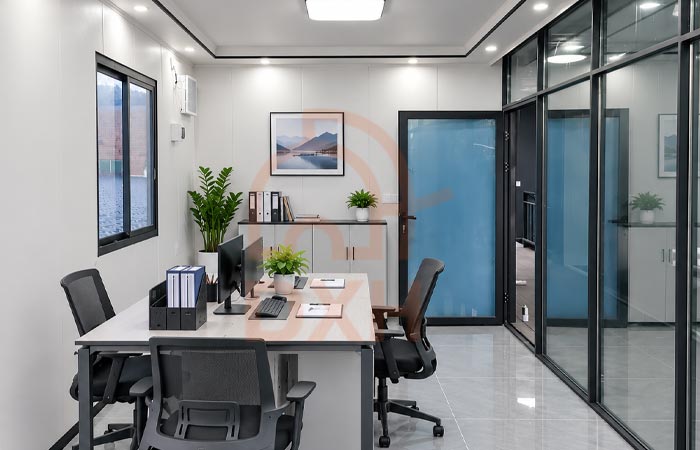
Modular mining camp construction uses prefabricated buildings that are manufactured in a factory and assembled on site. A complete camp can include worker dormitories, offices, kitchens, dining halls, laundry and shower blocks, clinics, recreation rooms, and utility buildings.
Common modular systems include:
Because much of the building work is completed before delivery, modular construction reduces on-site labor, material handling, and weather-sensitive work at the mine site.
Traditional construction refers to site-built camps using methods such as concrete foundations, masonry walls, steel structures, and conventional roofing and finishing work. Materials, equipment, and skilled trades must be brought to the site and coordinated over a longer construction period.
This approach can offer strong durability and design flexibility for permanent facilities. However, it depends heavily on local construction resources, weather conditions, site access, and the availability of skilled workers. For remote mining projects, those dependencies can increase both schedule risk and management complexity.
Modular buildings generally offer faster deployment, easier relocation, and better scalability, while traditional construction may offer greater customization and long-term durability for permanent facilities.
| Comparison Factor | Modular Buildings | Traditional Construction |
|---|---|---|
| Deployment Speed | Faster because factory production and site preparation can proceed in parallel; on-site assembly often takes days to weeks, depending on camp size and access. | Slower because structural work, walls, insulation, electrical systems, and finishing must be completed sequentially on site. |
| Remote-site Logistics | Foldable or flat-pack systems reduce transport volume and simplify delivery to isolated sites. | Requires repeated deliveries of raw materials, equipment, and trade labor. |
| On-site Labor | Requires a smaller installation team focused on foundations, assembly, and utility connections. | Requires more skilled labor for concrete, masonry, carpentry, electrical, plumbing, and finishing work. |
| Quality Control | Factory-controlled manufacturing supports more consistent insulation, finishes, and structural quality. | Quality depends more on site conditions, weather, contractor capacity, and supervision. |
| Scalability | Dormitories, offices, kitchens, and sanitation units can be added or removed as the workforce changes. | Expansion is possible but usually requires redesign, additional construction, and longer disruption. |
| Relocation | Units can be dismantled, transported, and redeployed to another mine phase or project. | Buildings are generally fixed assets and are difficult or costly to relocate. |
| Cost Predictability | Factory pricing and standardized specifications improve budget control. | More exposed to labor shortages, weather delays, material price changes, and change orders. |
| End-of-Project Value | Modules may be reused, relocated, resold, or removed during site rehabilitation. | Permanent structures can complicate land restoration and may have limited reuse value. |
Modular construction is especially suitable when a mining project needs accommodation quickly, operates in a remote location, or expects its workforce to change over time.
Choose modular buildings for:
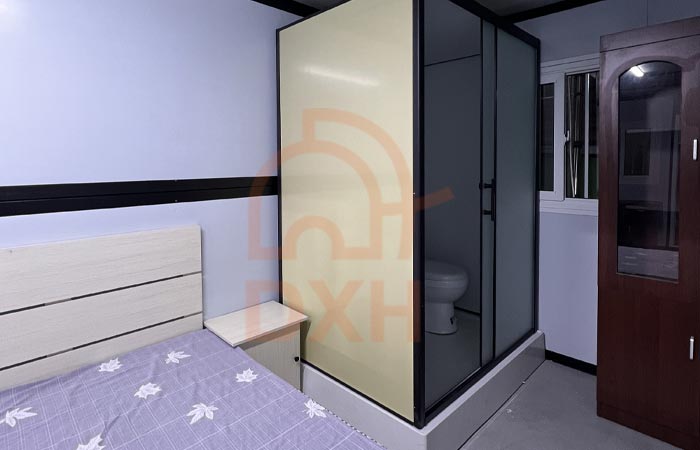
Modular systems can also support worker welfare through insulated dormitories, HVAC, private or semi-private rooms, laundry facilities, dining areas, and recreation spaces. Faster access to comfortable accommodation can help projects mobilize crews and begin operations sooner.
Traditional construction is not automatically the wrong choice. It can suit permanent mining facilities, long-life production bases, or projects located near established towns with reliable material supply and skilled contractors.
Traditional construction may be preferable when:
In these cases, a hybrid approach can also work well: permanent infrastructure for utilities, roads, and administration, combined with modular dormitories and relocatable support buildings.
Modular buildings often have a lower total cost of ownership for temporary and remote mining camps, but the lowest unit price does not always mean the lowest project cost. Buyers should compare the full cost of delivering, operating, and eventually removing the camp.
| Cost Category | Items to Evaluate |
|---|---|
| Building Supply or Construction | Structural systems, walls, roofs, floors, doors, windows, and interior finishes |
| Transportation | Freight, route restrictions, loading, unloading, and handling |
| Site Preparation | Groundworks, drainage, access routes, and foundations |
| Installation | Assembly, lifting equipment, labor, and connections |
| Utilities | Power, lighting, water supply, wastewater, ventilation, and communications |
| Operation | Cleaning, servicing, energy use, and facility management |
| Maintenance | Inspections, repairs, replacement components, and refurbishment |
| Project Changes | Expansion, relocation, modifications, or additional facilities |
| End-of-Project Requirements | Dismantling, removal, transport, storage, or disposal |
For short-term projects, installation efficiency, relocation requirements, and end-of-project removal can impact the final cost.
For a long-term operation, durability, maintenance access, energy performance, and the cost of adapting the facility over time may be equally important.
Before choosing either method, evaluate the specific conditions of the mine site.
High-quality modular buildings can serve temporary, semi-permanent, and long-term operations. Their suitability depends on structural specification, insulation, corrosion protection, maintenance plan, and local compliance requirements.
Modular construction often reduces schedule risk and on-site labor costs, but total savings depend on logistics, foundations, specification level, and project duration. A full lifecycle comparison is more reliable than comparing only the purchase price.
Permanent camps can benefit from traditional construction, but modular buildings can also be engineered for long-term use. A hybrid solution may provide the best balance of durability, flexibility, and cost control.
Detachable container houses, flat-pack systems, foldable units, and integrated modular buildings differ in transport efficiency, installation speed, structural performance, interior finish, and relocation requirements. The best option depends on the project's site conditions and budget.
Before choosing between modular buildings and traditional construction, evaluate your project's operational requirements, site conditions, delivery schedule, budget, and long-term plans.
Use the following checklist to compare both construction methods and identify the option that best fits your mining project.
Estimate peak occupancy, room configurations, shift patterns, and the number of workers who need accommodation at the same time.
Also consider whether the camp must support different groups, such as construction crews, operations staff, contractors, and visiting personnel. This helps determine the required number of dormitories, dining facilities, sanitation blocks, offices, and recreation areas.
Establish whether the camp will support a short-term exploration program, a construction phase, or a long-term mining operation.
If the project may end, expand, or move to another site, consider whether the buildings should be reusable, relocatable, or suitable for phased deployment. Modular buildings often suit temporary, semi-permanent, or relocatable camps.
Review transportation routes, road conditions, ground conditions, foundation requirements, power supply, water availability, wastewater management, and local construction resources.
Remote sites with limited road access, scarce labor, or unreliable utilities often benefit from factory-built modular systems. These systems reduce the amount of construction work that must be completed on site.
Define the dimensions, layouts, structural requirements, insulation, ventilation, fire-safety provisions, and building services required for each facility.
Specifications should reflect the site climate and operating conditions. For example, hot, cold, humid, dusty, or high-wind environments may require different insulation levels, HVAC systems, corrosion protection, and structural reinforcement.
Compare the full timeline for each option, including design, approvals, manufacturing or on-site construction, transportation, installation, utility connections, inspections, and commissioning.
Do not evaluate only the construction period. A modular camp may take longer to manufacture and ship, but it can still open sooner because factory production and site preparation can proceed in parallel.
Use a consistent scope when evaluating quotations. Include initial supply, site preparation, freight, installation, operation, maintenance, future modifications, and end-of-project removal or relocation.
The lowest purchase price does not always result in the lowest total cost. A modular solution may have a higher unit price but lower on-site labor, faster occupancy, and greater reuse value at the end of the project.
Confirm that the proposed solution meets applicable local building codes, engineering requirements, environmental conditions, and safety regulations.
Request technical documents such as structural calculations, material specifications, fire-safety details, electrical layouts, insulation data, and installation drawings. Clear documentation helps reduce approval delays and installation risks.
If workforce requirements may change, consider expansion space, utility capacity, compatible building configurations, and the practical requirements for relocation or removal.
A scalable camp should allow additional dormitories, offices, kitchens, and sanitation facilities to be added without redesigning the entire site. This is particularly important for mining projects with changing production schedules or workforce levels.
The ideal construction method should meet your project's requirements, schedule, budget, operational needs, and regulatory compliance.
Choose modular buildings when speed, remote-site logistics, scalability, relocation, or phased expansion are priorities. Choose traditional construction when the camp is permanent, locally resourced, and expected to remain in one location for many years. In some projects, a hybrid approach may provide the best balance of durability and flexibility.
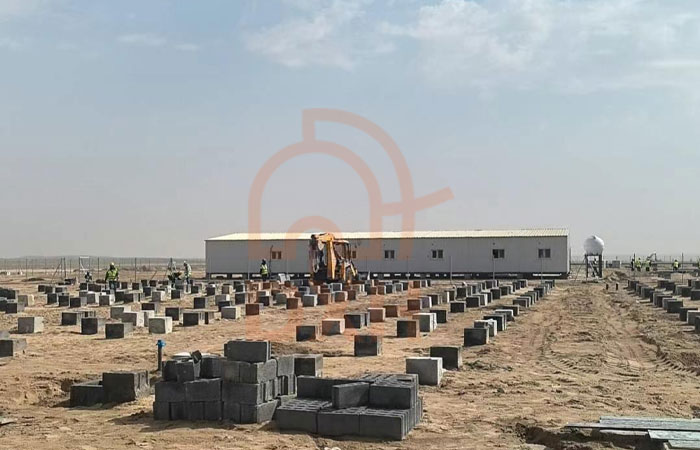
Every mining project has different workforce requirements, site conditions, and construction schedules. Selecting suitable buildings starts with understanding how the facilities will be used, where they will be installed, and how they may need to change throughout the project lifecycle.
DXH House offers modular building solutions for workforce accommodation and other project applications. Depending on the required configuration and site conditions, it can be used for dormitories, site offices, sanitation facilities, and other supporting spaces.
When discussing your project, prepare the following information:
Request a camp layout and quotation at DXH House to discuss your mining camp requirements and explore a modular building solution suited to your project.
Yes. For example, a project may use modular buildings for worker accommodation, site offices, and sanitation facilities. This approach allows project teams to use permanent construction where long-term durability is required, while using modular buildings for accommodation and facilities that may need to expand or relocate.
The full timeline depends on the number and type of buildings, design approval, manufacturing capacity, transportation, site preparation, installation, and utility connections. Factory production can often run in parallel with site preparation, which helps reduce the overall project schedule. For planning purposes, request a project-specific delivery schedule based on your camp size, destination, and site conditions.
Most modular buildings require a stable, level base, but the foundation type depends on ground conditions, building weight, wind load, and project duration. Options may include concrete strips, concrete pads, adjustable steel supports, or other engineered foundation systems.
Yes. Camps can be engineered for high heat, cold, humidity, dust, snow, wind, and corrosive coastal environments. Design measures may include enhanced insulation, ventilation, air conditioning, heating, corrosion-resistant materials, reinforced structures, and sealed openings.

Xunqing Rd No.639, Taoyuan Town, Wujiang District, Suzhou City, Jiangsu Province, China
View All Contact


Nuestro horario
Lun 21/11 - Miércoles 23/11: 9 a.m. - 8 p.m.
Jueves 24/11: cerrado - ¡Feliz Día de Acción de Gracias!
Viernes 25/11: 8 a.m. - 10 p.m.
Sábado 26/11 - Dom 27/11: 10 a.m. - 9 p.m.
(todas las horas son hora del este)

 Red IPv6 compatible